ThrottleLens Studio · Field Notes
Master the Roll: How to Shoot Cinematic Motorcycle Panning Shots with a Zoom Lens
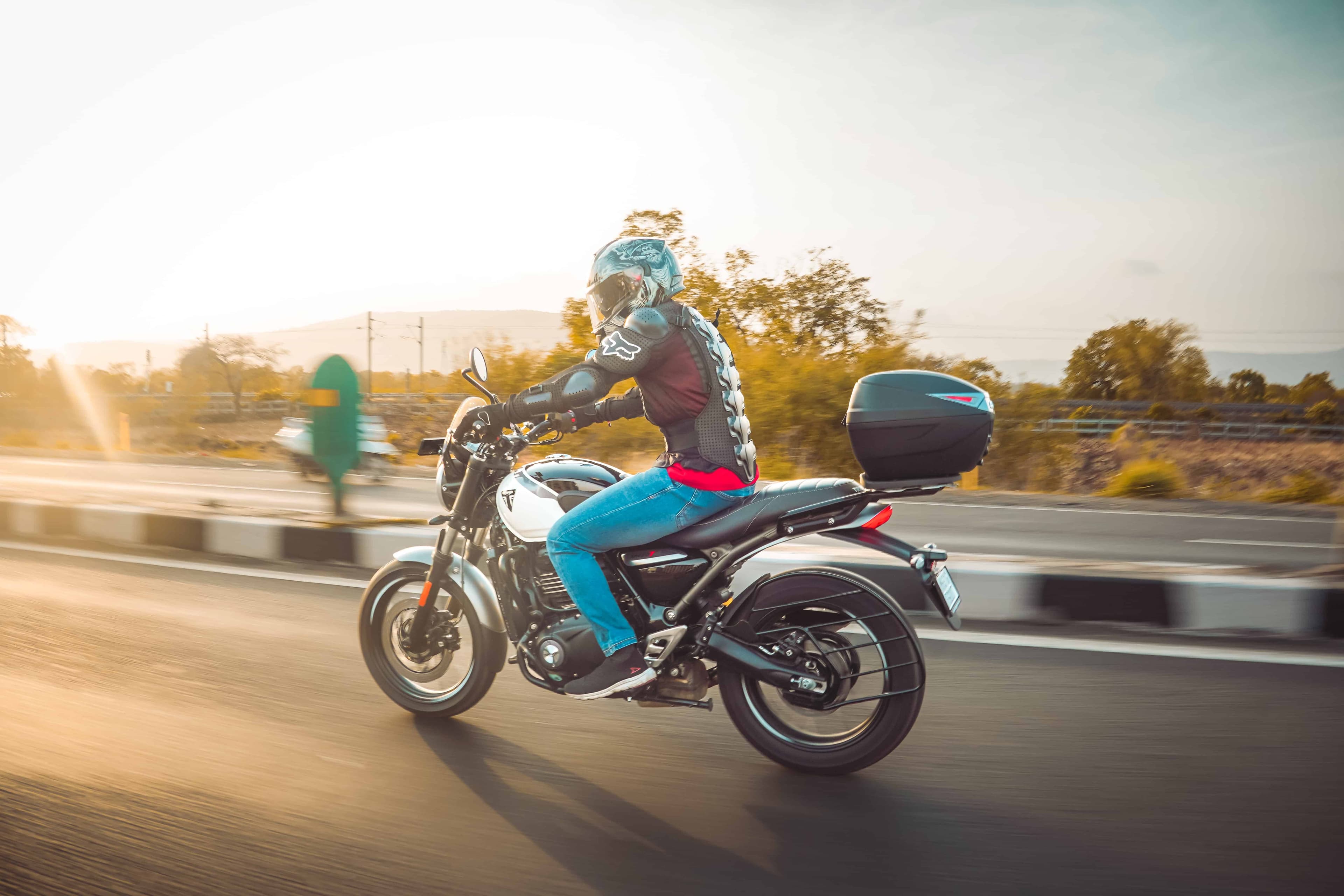
Master the Roll: How to Shoot Cinematic Motorcycle Panning Shots with a Zoom Lens
SEO Meta Engine Configuration
Primary Keyword: motorcycle panning photography
Excerpt (Meta Description): Want to capture high-speed motorcycle action without losing sharpness? Learn the exact camera settings, gear tips, and tracking techniques used to shoot stunning cinematic rolling shots like AK_08306 copy.jpg.
Let’s Talk About Motion Blur
There is a massive difference between taking a static photo of a motorcycle parked on the side of the road and actually capturing the raw kinetic energy of a machine moving fast. A solid rolling shot makes you feel the speed, hear the exhaust note, and immediately changes the vibe of your portfolio.
But if you’ve actually gone out and tried to pull off motorcycle panning photography, you know it's a massive pain to get right on your first try. Missed focus, ghosting, or keeping the entire frame frozen because your shutter speed was too safe are frustrations every automotive photographer runs into.
You don't need a high-end full-frame tracking vehicle setup to fix this. For our shoot in AK_08306 copy.jpg, we ran a standard crop-sensor **Sony a6400** paired with a massive focal range **Sigma 18-300mm** zoom lens. Here is exactly how we set up the gear, handled the tracking physics, and got a tack-sharp result on the asphalt.
The Reality of Using This Setup
A lot of gear reviewers will tell you that you need ultra-wide prime lenses with fast apertures like f/1.4 to make things look premium. That’s just not true in the real world when you're tracking cars or bikes from a distance.
The Exact Settings Behind the Shot
If you leave your camera on Auto or Aperture Priority, it will always default to a fast shutter speed to keep the frame safe. That ruins the look because it freezes the wheels, making a bike traveling at high speed look like it’s balanced on a kickstand. Drop into Manual or Shutter Priority instead.
1. The Shutter Speed Balancing Act
This is where most shots fail. A good starting point is matching your shutter speed to the physical speed of the bike. If the bike is passing you at roughly 60 km/h, drop your dial down to 1/60s. If you want a background that looks like abstract paint strips and you have steady hands, pull it down to 1/40s or 1/30s. Just be prepared to miss a few frames to get that one perfect keeper.
2. Stickiness via Continuous AF (AF-C)
Switch your camera over to AF-C (Continuous Autofocus) and pick Tracking: Flexible Spot. Before the bike even crosses your center path, click half-press on the rider's helmet or the side branding on the fuel tank. Let the camera's internal tracking engine handle the movement math while you focus purely on your physical body mechanics.
3. Continuous Hi Burst (Don't Just Take One Shot)
No one clicks a single frame at a slow shutter speed and expects a crisp image. Crank your drive mode up to Continuous Hi (usually around 8 to 11 frames per second). When you track the bike through its cleanest arc, hold that shutter down for a burst of 5 to 7 frames. The true keepers are almost always found right in the exact middle of that burst sequence where your speed perfectly synced up with theirs.
The Body Mechanics: You Are the Tripod
The biggest trick to a clean shot like AK_08306 copy.jpg isn't actually a software setting. It's how you stand on the tarmac.
2. Twist your waist up-track to meet the bike as it approaches.
3. Tuck your elbows hard against your ribs to stabilize the heavy Sigma lens.
4. Track, press down on the burst, and pivot smoothly across your hips. Do NOT stop moving when the shutter finishes clicking.
That follow-through motion is critical. If you freeze your arms the moment you think you got the shot, the camera naturally decelerates right before the final curtain closes, introducing nasty camera shake into your latest frames.
Quick Setting Cheat Sheet
| Setting | Real-World Selection |
|---|---|
| Shooting Mode | Manual (M) or Shutter Priority (S) |
| Shutter Speed | 1/40s to 1/80s (depending on target speed) |
| Aperture | Let it sit around f/8 to f/11 for a wider safety net of sharpness |
| ISO | Keep it at 100 or 200 to maximize detail and color depth |
| Autofocus Area | AF-C + Real-time Tracking enabled |
Ready to film your next ride?
Rolling-shot planning, safety briefs, and delivery timelines — built for Indian track calendars.
Book a production consult